Zvernec — a quiet island and coastal area on the Narta Lagoon near Vlora — has become the centre of a major political controversy in Albania. A luxury resort project linked to Jared Kushner has triggered protests, clashes with private security guards and police, concern from Greece, and an anti-corruption investigation into how some of the land was acquired. If you have been searching “what is happening in Zvernec” or “Albania resort protest,” here is what is known, based on the reporting listed at the end of this article.
In This Article
Key Facts at a Glance
- ProjectLuxury resort on the Zvernec-Narta coast (a separate Kushner-linked resort is planned on Sazan island)
- InvestmentAround €4 billion, according to PM Edi Rama and Jared Kushner
- DeveloperZvërnec South Adriatic Development, an Albanian company owned through Dutch and Qatar-registered companies
- Key investorsBusinessmen Ramez and Moutaz Al-Khayyat; Jared Kushner says he is a minority partner. Affinity Partners says the fund is not involved
- LocationZvernec-Narta coast, north-west of Vlora, in the Pishë Poro–Narta protected area
- PermitsDevelopment permits approved by the National Territorial Council in 2025; critics say they were not officially published
- ProtestsClashes at the site on 30 May 2026; nationwide protests since 31 May
Latest Developments (as of 14 October 2026)
Since this explainer was first published in early June, the dispute has widened and the investigations have moved on. The main developments, as reported by the sources listed at the end of this article:
- A nationwide protest movement. Daily demonstrations began in Tirana on 31 May and spread to other cities. Dubbed the “Flamingo Revolution”, the movement broadened from the resort itself to demands including Prime Minister Edi Rama’s resignation and the repeal of amendments to the law on protected areas. Some protests have turned confrontational: on 8 September, as parliament returned from its summer recess and the protests passed their 100th day, police clashed with demonstrators outside parliament in Tirana. On 13 October, a student protest that Balkan Insight described as part of the movement turned violent outside the Ministry of Education in Tirana (see our report on the student protest).
- Land-title investigation. Reuters reported in July, citing case files, that SPAK, Albania’s anti-corruption prosecution service, suspects Artur Shehu, the Miami-based businessman who sold coastal land to a company connected with the resort, and his associates of laundering cocaine-trafficking proceeds into property and of using falsified land titles to hide where the money came from. According to Reuters, around €110 million from the land sale has been frozen in a notary’s account. Shehu denies the allegations: his lawyer told Reuters they were untrue and that his client had lawfully sold land his family had held since Ottoman times. Reuters also reported that it found no evidence that Kushner or the resort’s other backers knew of any suspicions about Shehu when the land changed hands, and no wrongdoing has been alleged against them.
- Kushner’s role clarified. In June, Affinity Partners said the fund is not involved in developing the project and that any investors take part in a personal capacity. In a statement in early October responding to an investigation by The New Yorker, Kushner described himself as a minority partner focused on the project’s architectural vision and design, said the land near Zvernec had been bought for €230 million, and said the project would have to undergo all applicable Albanian regulatory and environmental reviews.
- The government is standing by the project. Rama has said there is no chance the investment will stop while he is in office, and argues that large international projects create jobs and help modernise the country.
- Three more permits in the same protected area. On 29 September, Balkan Insight (BIRN) reported that Albania’s National Council of Territory and Water had approved three development permits in May and June 2025, for a resort village of villas and seafront buildings, a hotel and a tourist complex, together covering more than 190,000 square metres in the Pishë Poro–Narta protected area. Two of the sites are in Zvernec. BIRN said final decisions on the permits had not yet been formally issued because the developers had not completed the required documentation. Balkan Insight also reported that all three plots have previous connections to Artur Shehu; Shehu did not respond to BIRN and has previously denied all allegations made against him. See our news brief on the three permits.
On the evidence of Kushner’s October statement, the Zvernec resort has not yet completed Albania’s approval and environmental review procedures.
Where Is Zvernec?
Zvërnec is a village on the Narta Lagoon, just north-west of Vlora on Albania’s southern Adriatic coast. A small island in the lagoon is home to the Monastery of Saint Mary (Manastiri i Shën Marisë), a medieval Byzantine-era monastery protected as a cultural monument. Visitors reach the island via a wooden footbridge across the shallow lagoon — it has long been a quiet stop for travellers exploring the Vlora coastline.
The broader Zvernec-Narta area lies within the Pishë Poro–Narta protected area, near the delta of the Vjosa River; environmental organisations consider it one of the last largely untouched stretches of coast in the Mediterranean. The lagoon is known for its flamingos and other waterbirds, and the coast nearby has sea-turtle nesting sites.
The Resort Project: What Is Being Built?
The project at the centre of the controversy is a luxury resort planned for the Zvernec-Narta coastline, inside the Pishë Poro–Narta protected area. It is separate from, but often discussed alongside, a Kushner-linked plan to turn Sazan island, a former military base offshore, into a luxury resort valued at about €1.4 billion.
The Zvernec developer is Zvërnec South Adriatic Development, an Albanian company set up in August 2024. According to Exit News, its ownership chain runs through Dutch shell companies to a Qatar-registered holding company controlled by businessmen Ramez and Moutaz Al-Khayyat; the holding company’s chief executive is Asher Abehsera, a former business partner of Jared Kushner. Kushner’s own role has been disputed: Affinity Partners, his investment fund, says it is not involved in the development, while Kushner himself said in October 2026 that he is a minority partner.
Prime Minister Edi Rama and Kushner have both put the potential investment at around €4 billion.
Development permits were approved by Albania’s National Territorial Council, chaired by Prime Minister Edi Rama; BIRN reports that they were granted less than eight months after the company was founded. Critics, including BIRN’s Albanian service Reporter.al, say the permits were not officially published — a detail that has fuelled criticism about transparency. Rama has said the permits issued so far cover only temporary access roads and research activities.
The Protests: What Happened on 30 May 2026?
A week after residents and activists protested against the fencing-off of the beach on 23 May, demonstrators returned on Saturday 30 May 2026 to the project site at Portonovo, near Zvernec, to try to block work there. The protest drew local residents and environmental activists. Zvernec and nearby Narta are home to members of Albania’s Greek minority, and the property rights of minority members later became part of Greece’s response.
The situation escalated when confrontations broke out between protesters and private security guards at the site. Videos showed physical altercations and the use of pepper spray, and several protesters were injured. According to the Greek Foreign Ministry, a Greek citizen was among the injured.
Police were present, and their handling of the events has itself become controversial. Albanian authorities subsequently suspended several police officers and revoked the licences of two private security companies.
Timeline of Events
Amendments to Albania’s protected areas law allow five-star hotels to be built inside protected areas.
Kushner announces plans for Sazan island and the Zvernec coast. Zvërnec South Adriatic Development is founded in August.
The National Territorial Council approves development permits for the Zvernec company; critics say they are not officially published.
Residents and environmental activists protest against the fencing-off of the beach.
Protest at Portonovo. Clashes between demonstrators and private security guards; several people injured, including a Greek citizen.
Greece’s Foreign Ministry expresses strong concern and asks Albania for a full investigation. Rama praises the police response to the private guards. Daily protests begin in Tirana.
SPAK opens an investigation into how land titles in the area were acquired and sold. Several police officers are suspended and two private security firms lose their licences.
Protests spread nationwide; Reuters reports that around €110 million from the land sale has been frozen; Affinity Partners distances itself from the development; Kushner says he is a minority partner. See Latest Developments.
BIRN reports that three further development permits in the Pishë Poro–Narta protected area were approved in 2025 but have not yet been formally issued. See our news brief.
Why Are People Opposed?
Opposition to the project centres on three main issues:
1. Environmental Concerns
The Zvernec-Narta area lies inside a protected area near the Vjosa delta, and its lagoon, dunes and wetlands support flamingos and other waterbirds. Environmental organisations argue that a resort of this scale would cause irreversible damage to the ecosystem — through construction, increased traffic, water demand, and light and noise pollution. AFP reported in September that preliminary work had already damaged the coast, destroying bird and loggerhead turtle nesting sites.
Albania received international praise when it designated the Vjosa as Europe’s first Wild River National Park in March 2023. Critics say that allowing large-scale coastal development near the river’s delta contradicts that conservation achievement.
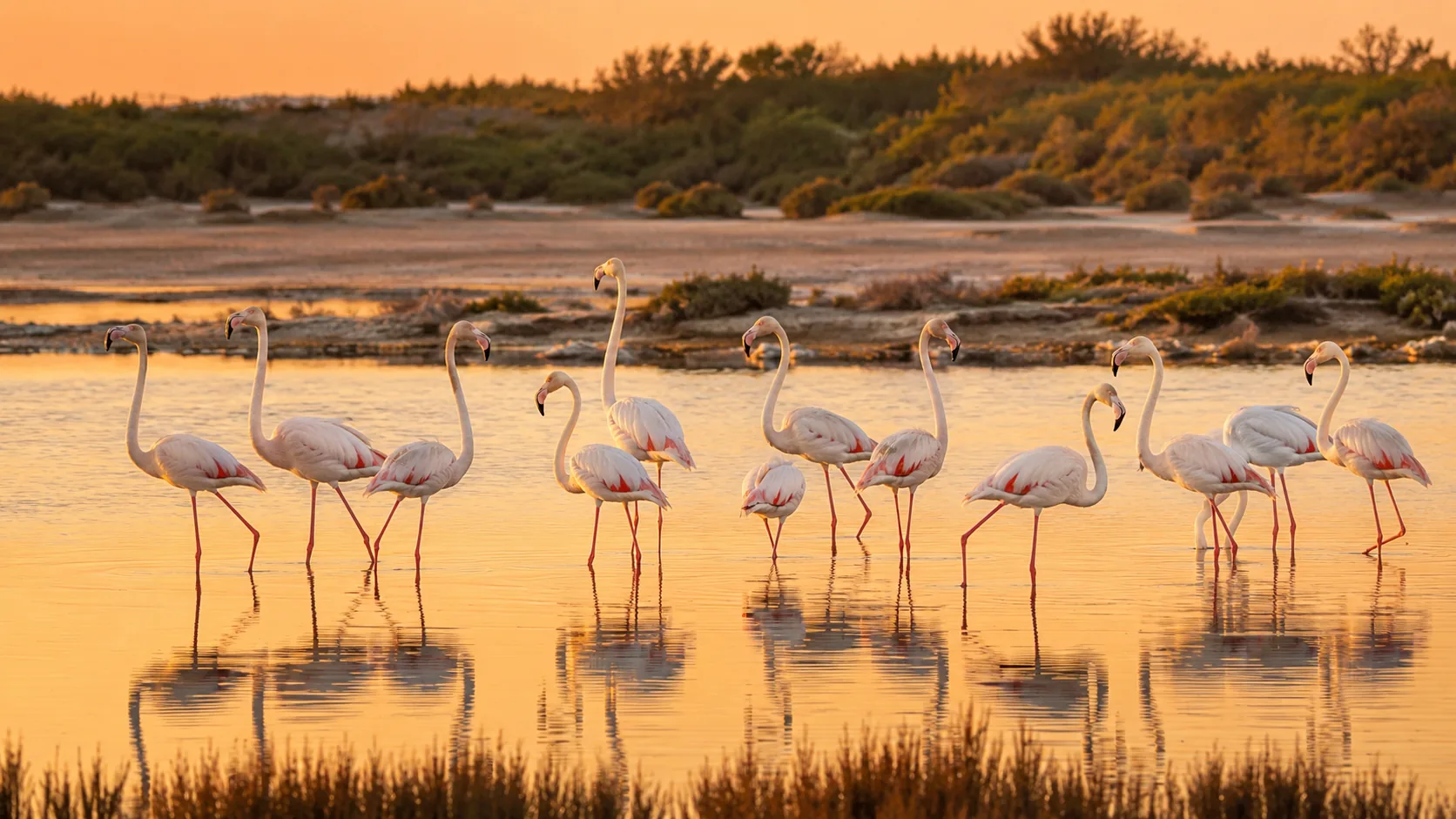
The Narta Lagoon is a critical habitat for flamingos and other migratory birds.
2. Property Rights & Land Ownership
Ownership of the coastal land has been contested for decades. BIRN found multiple competing claims over the plots concerned — including village residents and the Shehu family — with courts issuing conflicting rulings over the years. Local families, including members of the Greek minority, argue that the project could create faits accomplis on land they consider theirs. Prime Minister Rama has said the investment is on private property. Since June, prosecutors have been investigating whether some of the land sold for the project was acquired using forged documents, Reuters has reported (see Latest Developments).
Land ownership in Albania is notoriously complex. Decades of communist-era collectivisation, followed by chaotic post-communist privatisation, left many properties with overlapping or unclear title claims. This history makes large-scale land acquisition contentious in any part of the country.
3. Transparency & Process
Reports that the development permits were not officially published have raised red flags for critics, opposition politicians and civil society groups, as has the 2024 change to the protected areas law that opened such areas to five-star hotels. SPAK — Albania’s Special Prosecution Office Against Corruption and Organised Crime — opened an investigation in early June into the funds used to acquire land titles in the area and their sale to investors.
The Government’s Position
Prime Minister Edi Rama has defended the project, stating that the investment is on private property and that it represents a major economic opportunity. Reacting to the 30 May clashes, he praised the State Police response to what he called “that gang of brainless thugs” — referring to the private security guards involved, not the protesters. He has said there is no chance the investment will stop while he is in office, and has dismissed the wider protests as orchestrated by political rivals.
The government’s broader argument is that large international tourism projects create employment and help modernise a country that spent decades in communist isolation.
The International Response
The injury of a Greek citizen during the clashes drew Greece into the situation. On 31 May the Greek Ministry of Foreign Affairs expressed strong concern and said its embassy in Tirana was making representations to the Albanian side, requesting a full investigation and the attribution of responsibility. It also stressed the protection of the rights and property of members of the Greek national minority, linking this to Albania’s EU accession process.
The controversy has also attracted attention from international media and environmental organisations, given the project’s connection to Jared Kushner and the sensitive ecological status of the area.
What Both Sides Are Saying
In Favour of the Project
- Around €4 billion of potential investment, according to the government and Kushner
- Large international projects would create employment, the government argues
- Supporters say it would put Albania on the international luxury tourism map
- The resort is on private property, according to the Prime Minister
- Kushner says the project will go through all applicable regulatory and environmental reviews
Against the Project
- Environmental damage to a protected coastal wetland
- Disputed land ownership, now under criminal investigation
- Unpublished permits and lack of transparency
- Contradicts Albania’s Vjosa conservation achievements
- Risk of displacing local communities and traditional livelihoods
- Violence by private security guards against protesters on 30 May
What Does This Mean for Travellers?
Planning a trip to Vlora or the Albanian Riviera?
- The city of Vlora and its beaches are not part of the disputed development zone around Portonovo/Zvernec.
- Zvernec island and its monastery: access arrangements near the development area may change, so check locally before you go.
- The Narta Lagoon is known for its flamingos and other waterbirds, and is visited for birdwatching and nature walks.
- Getting there: Vlora’s new airport has been built but has not opened, and in August the government announced it was terminating the airport concession (see our report on the Vlora airport). For now, travellers heading to Vlora fly into Tirana and continue by road.
- Protests have taken place mainly in Tirana, with some in other cities, and some have ended in clashes with police. Avoid demonstrations and follow local news.
For broader travel planning, see our 7-day Albania itinerary and travel tips.
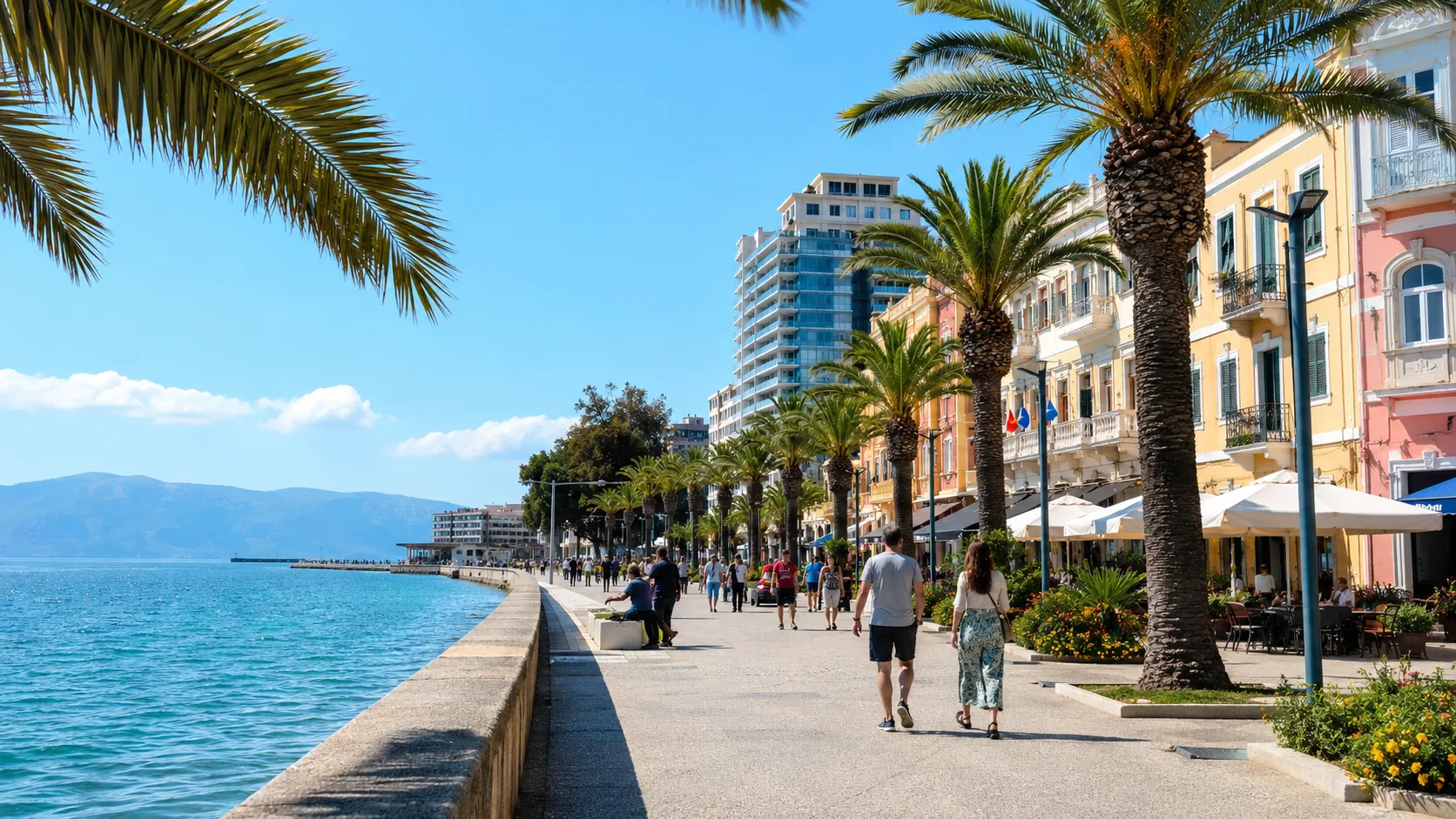
Vlora’s seafront promenade.
What Happens Next?
As of 14 October 2026, these are the issues to watch:
- SPAK investigation — prosecutors are investigating suspected forged deeds and money laundering linked to the land sold for the resort, according to Reuters. The outcome could affect who legally owns parts of the site.
- Approvals and environmental review — according to Kushner, the project still has to go through Albania’s regulatory and environmental reviews. Whether an environmental impact assessment is carried out and made public will be closely watched.
- Other projects in the protected area — BIRN’s reporting on three further development permits in Pishë Poro–Narta, which have not yet been formally issued, has widened the debate beyond a single resort (see our news brief).
- The protest movement — protesters continue to demand the Prime Minister’s resignation and the repeal of amendments to the protected areas law; the government says the project will go ahead.
We will update this article as the situation develops.
Frequently Asked Questions
What is happening in Zvernec, Albania?
A luxury resort is planned for the Zvernec-Narta coast near Vlora, inside a protected area. The project is linked to Jared Kushner, who says he is a minority partner; his investment fund, Affinity Partners, says it is not involved in the development. Clashes between protesters and private security guards at the site on 30 May 2026 triggered daily protests that grew into a nationwide anti-government movement. Albania’s anti-corruption prosecutors (SPAK) are investigating how some of the land was acquired, and Greece raised concerns after a Greek citizen was injured.
Where is Zvernec in Albania?
Zvernec (Zvërnec) is a village and small island on the Narta Lagoon, just north-west of Vlora on Albania’s southern Adriatic coast. The island, reached by a wooden footbridge, is home to the medieval Monastery of Saint Mary, and the area lies within the Pishë Poro–Narta protected area near the Vjosa delta.
How big is the Zvernec resort project?
Prime Minister Edi Rama and Jared Kushner have both put the potential investment at around €4 billion. The developer is Zvërnec South Adriatic Development, an Albanian company whose ownership chain leads to a Qatar-registered company controlled by businessmen Ramez and Moutaz Al-Khayyat. A separate Kushner-linked plan for Sazan island is valued at about €1.4 billion. According to Kushner, as of October 2026 the Zvernec project still had to go through Albania’s regulatory and environmental reviews.
Why are people protesting the Zvernec resort?
Protesters cite damage to a protected coastal wetland, disputed land ownership (prosecutors are investigating suspected forged deeds), and a lack of transparency around development permits approved in 2025, which critics say were not officially published. The movement has since broadened to demands for the Prime Minister’s resignation and the repeal of amendments to the protected areas law.
Is Zvernec safe to visit as a tourist?
Since June 2026 most protests have taken place in Tirana, with some in other cities including Vlora, and some have ended in clashes with police, so avoid demonstrations. The city of Vlora and its beaches are not part of the disputed development area. Access around the development zone near Portonovo may change, so check locally before visiting Zvernec island and the monastery.
New to Albania?
This might be your first time on Your Albania, an independent English-language guide to the country.
Sources
- Balkan Insight (BIRN): Behind a Trump-Linked Albanian Resort Project, a Host of Murky Interests (4 June 2026)
- Balkan Insight (BIRN): Across the Balkans, Foreign-Backed Luxury Developments Cause Local Anger (25 August 2026)
- Balkan Insight (BIRN): More Resorts Planned in Protected Area at Heart of Albanian Protests (29 September 2026)
- Al Jazeera (Reuters): Land sold for Kushner-backed Albania resort suspected of forged deeds (11 July 2026)
- Al Jazeera (AFP/Reuters): Thousands protest in Albania against coastal resort linked to Jared Kushner (4 June 2026)
- Al Jazeera (AFP/AP): Protesters, police clash in Albania over Trump-linked project (8 September 2026)
- The National Herald: Greek Foreign Ministry Expresses Strong Concern Over Incidents in Albania (statement of 31 May 2026)
- Euronews Albania: Violence Against Protesters in Zvërnec: Rama Praises State Police Response (31 May 2026)
- Exit News: Jared Kushner’s Fund Officially Distances from Zvernec Development (10 June 2026)
- Tirana Times: Jared Kushner Defends Controversial Albania Resort Project (9 October 2026)
- Balkan Insight (BIRN): Albanian Student Protesters Clash with Police Outside Ministry of Education (13 October 2026)
- Albanian Daily News: VIA concession: MABCO seeks negotiations (13 August 2026)
Last checked 14 October 2026.